

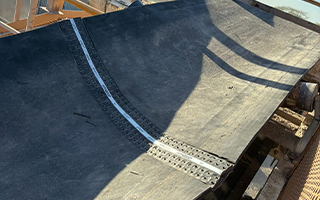


Mechanical Splicing or Vulcanization: Which Solution Should You Choose?
Discover the differences between mechanical splicing and vulcanization of conveyor belts. Advantages, limitations and selection criteria to optimize your conveyor systems.
Mechanical Splicing or Vulcanization: Which Solution Should You Choose?
Choosing the right conveyor belt splicing method is an essential step in ensuring the performance and reliability of a conveyor system. There are two main solutions: mechanical splicing and vulcanization.
Contrary to popular belief, there is no one-size-fits-all solution. The right choice depends on many factors: working environment, belt type, acceptable downtime, budget, available skills and operating constraints.
In this article, we compare these two technologies to help you choose the most suitable one for your installation.
What is a Mechanical Splice?
A mechanical splice consists of joining the ends of a conveyor belt using a specially designed fastening system.
Depending on the application, it can be installed directly on site with limited downtime.
This is what you can achieve with our SUPER-SCREW®*.
Advantages
- Quick installation.
- Return to service within 2 hours maximum in many cases.
- On-site intervention.
- Minimal equipment required.
- Ideal for emergency repairs.
- Reduced production downtime.
- Durable solution.
- Can be installed even in extreme conditions.
Limitations
- Service life varies depending on operating conditions.
- Requires regular inspection.
- Some highly demanding applications may require another solution.
What is Vulcanization?
Vulcanization consists of joining the ends of the belt by recreating continuity in the belt structure through a process using heat, pressure and curing time.
It is widely used in installations where operating conditions are particularly demanding.
We offer several types of vulcanizing presses depending on the industry and operating conditions.
Advantages
- Excellent mechanical resistance.
- Very discreet splice.
- Suitable for long conveyors.
- Good performance in intensive applications.
Limitations
- Longer downtime.
- More complex intervention.
- Requires specific equipment.
- Requires qualified technicians.
- Weather conditions can sometimes make outdoor interventions more challenging.
Comparison of the Two Solutions
Criterion Mechanical Splicing Vulcanization
--------------------------------------------------------------------------------------------------------------------------------------------------------------------
Intervention time Very fast Longer
--------------------------------------------------------------------------------------------------------------------------------------------------------------------
Conveyor downtime Low Higher
--------------------------------------------------------------------------------------------------------------------------------------------------------------------
On-site intervention Very simple More technical
--------------------------------------------------------------------------------------------------------------------------------------------------------------------
Equipment required Limited Vulcanizing press and specialized equipment
--------------------------------------------------------------------------------------------------------------------------------------------------------------------
Maintenance Easy More complex
--------------------------------------------------------------------------------------------------------------------------------------------------------------------
Emergency repair Excellent solution Less suitable
--------------------------------------------------------------------------------------------------------------------------------------------------------------------
Intervention cost Generally lower Generally higher
What Criteria Should Be Considered?
Before choosing a splicing method, it is recommended to analyze:
- Belt width;
- Its mechanical strength;
- Material being conveyed;
- Conveyor speed;
- Operating temperature;
- Operating conditions (dust, humidity, abrasive materials);
- Production constraints;
- Frequency of permitted downtime.
A comprehensive assessment helps identify the most relevant solution.
When Should You Choose Mechanical Splicing?
Mechanical splicing is particularly suitable when:
- A quick restart is essential;
- The intervention must be carried out directly on site;
- Technical resources are limited;
- Maintenance needs to remain simple;
- The conveyor is subject to frequent interventions.
Modern systems now offer high performance while minimizing downtime.
When Should You Choose Vulcanization?
Vulcanization remains a benchmark solution when:
- Very high mechanical strength is required;
- Downtime can be planned;
- The operating environment is particularly demanding;
- The belt operates continuously over long distances.
The MLT Approach: Choosing the Right Solution for Every Need
At MLT, there is no one-size-fits-all answer. Each conveyor has specific constraints and deserves a tailored analysis.
The mechanical splicing solutions developed by MLT meet the needs of many industrial applications by offering:
- Quick installation;
- High reliability;
- Simplified maintenance;
- Significant reduction in downtime.
When the installation's constraints require it, other techniques can also be considered to ensure the best possible performance.
Conclusion
The choice between mechanical splicing and vulcanization depends above all on your operating environment.
If your priority is to reduce downtime and simplify interventions, mechanical splicing is often the most suitable solution.
If your installation requires perfect belt continuity and operations can be planned, vulcanization remains a relevant option.
The key is to choose a solution that matches the constraints of your operation in order to ensure the long-term availability of your conveyor systems.
FAQ
Is a mechanical splice as reliable as vulcanization?
Both technologies are reliable when properly selected and installed. Their suitability mainly depends on the operating conditions.
Can a mechanical splice be installed directly on site?
Yes. This is one of its main advantages: it often allows for a quick intervention without completely dismantling the conveyor.
Is vulcanization always the best solution?
No. While it offers excellent performance in certain contexts, it also involves longer downtime and greater technical resources.
How do you choose the right method?
The choice depends in particular on the belt type, material being conveyed, production constraints and maintenance objectives. A technical assessment helps determine the most suitable solution.